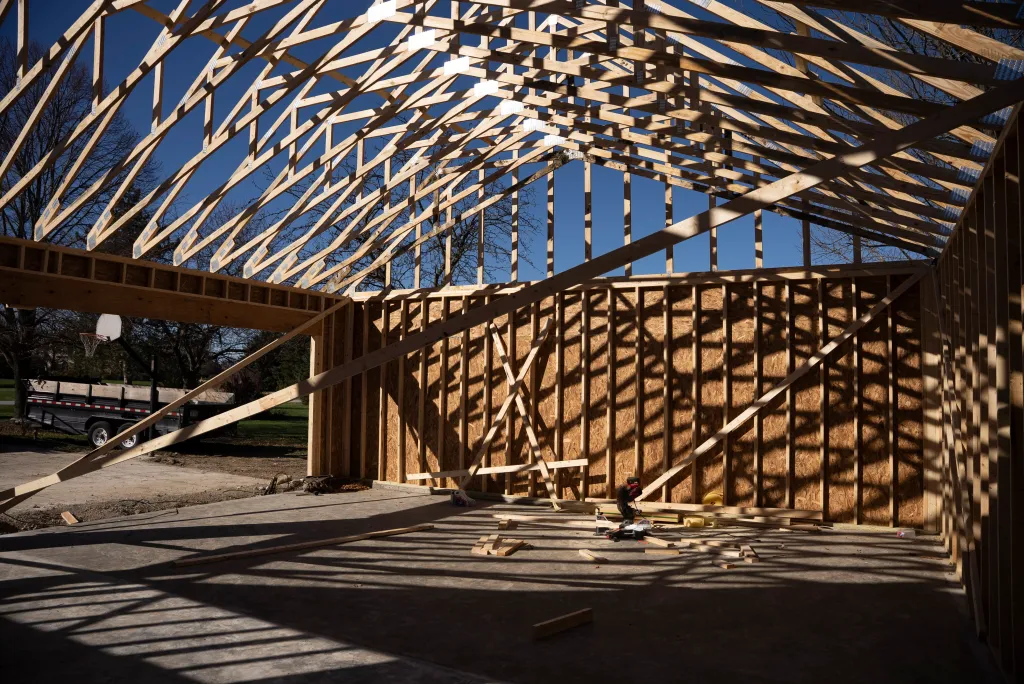
If you want a detached garage done before the Ohio winter sets in, the planning conversation needs to happen sooner than most homeowners expect. The build itself moves quickly — a standard two-car detached structure typically runs six to eight weeks from slab pour to final walkthrough. What takes time is everything that happens before the first shovel hits the ground.
The planning-to-build timeline
Design and site assessment (2–3 weeks): Before a permit application can be submitted, the project needs a site plan that accounts for lot setbacks, drainage, placement relative to the home, and utility locations. This isn’t a lengthy process for a straightforward detached build — but it can’t be skipped, and it has to happen before anything else.
Permitting (3–6 weeks): Permit review timelines vary across Miami Valley municipalities. Dayton, Centerville, Kettering, Beavercreek, and Huber Heights all have different review cycles and submittal requirements. An experienced local contractor knows which jurisdictions move faster and how to submit a complete package the first time to avoid resubmittal delays.
Material lead times (2–4 weeks): Garage doors, windows, and specialty siding can have lead times that surprise homeowners who assume everything ships immediately. Ordering materials before the permit is issued — when the design is finalized but approval is pending — is standard practice on a well-run project and keeps the build schedule intact when the permit comes through.
The build itself (6–8 weeks): Slab, framing, roofing, exterior, electrical, doors, and finish work. A detached garage moves faster than almost any other construction project of comparable cost because it doesn’t involve the coordination complexity of interior work. Weather is the main variable in the Miami Valley — which is exactly why fall is the right season to build.
Why fall is the right time to build in the Miami Valley
Dayton’s late summer and fall window — roughly August through October — is consistently the best construction weather of the year. Temperatures are moderate, ground conditions are stable, and the freeze-thaw cycles that can complicate concrete work are still months away. A slab poured in September cures properly. A slab poured in December is a different conversation.
Scheduling also favors fall builds. Summer is peak season for construction across the Miami Valley, which means contractor availability tightens and lead times extend. A homeowner who plans in June and July is scheduling into that quieter fall window — which typically means better scheduling predictability and a crew that isn’t stretched across a dozen competing projects.
What that means for right now
Add it up: two to three weeks for design, three to six weeks for permitting, and a six-to-eight-week build. A project that starts the design conversation in late June or July is realistically positioned for a September or October completion. A project that starts in September is looking at November at the earliest — which puts the most weather-sensitive phase of the build directly in early winter.
Ram Construction is currently scheduling fall garage builds across the greater Dayton area. If a new garage is on your list for this year, the conversation starts now.
Ready to get on the schedule? Call Ram Construction at 937-885-0088 or book a consultation at ramconstructionusa.net/book-an-appointment